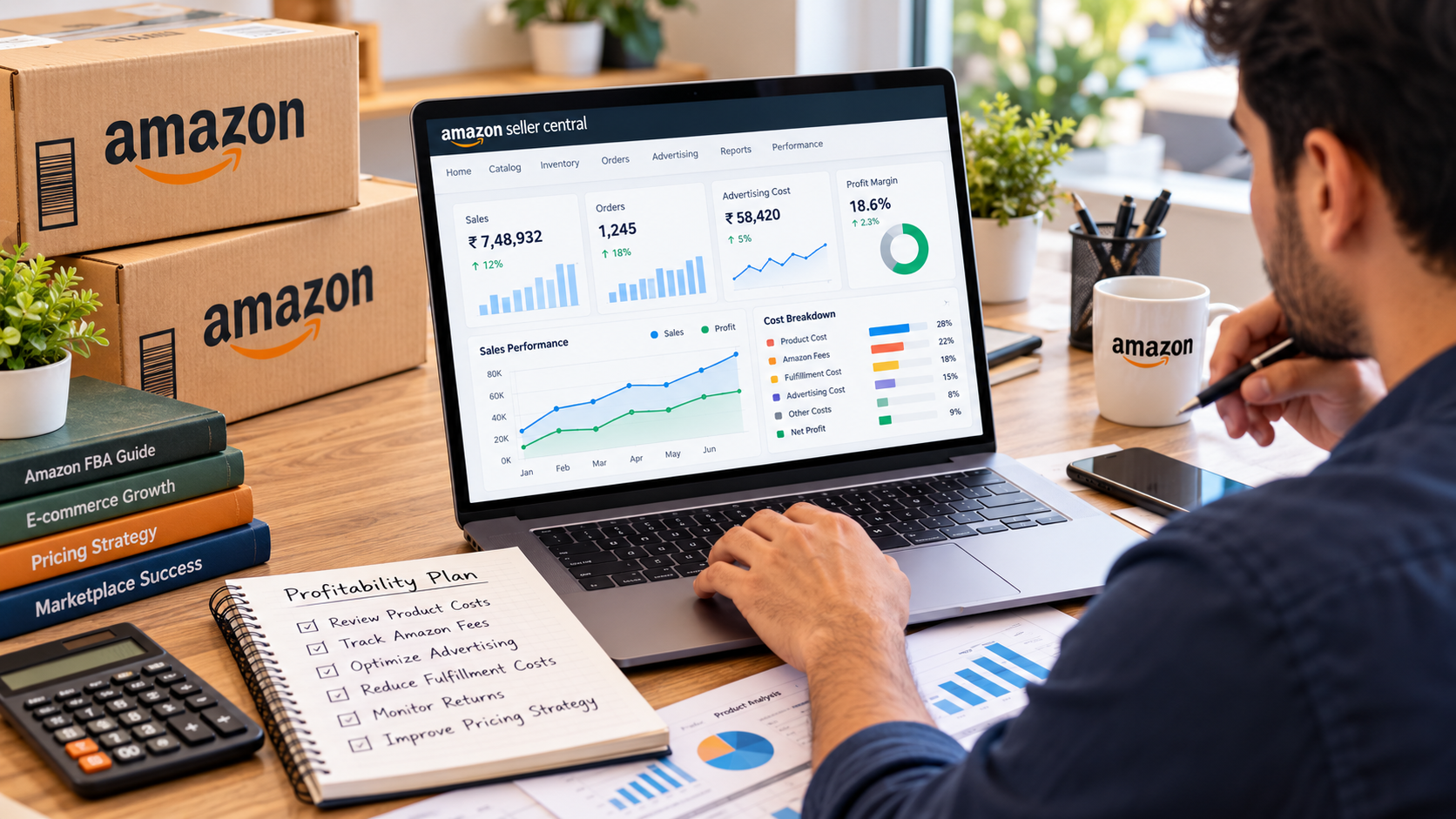
Selling more products does not always mean earning more profit. Amazon sellers need to understand the complete cost structure behind every order, including referral fees, fulfillment costs, advertising spend, returns, product costs, and other operational expenses. Measuring profitability at the product level helps sellers identify where revenue is being converted into sustainable profit and where margins are being lost.
Understand Your True Amazon Selling Costs
The first step toward improving profit margins is understanding the complete cost associated with every product sold. Looking only at the selling price and product cost can create a misleading picture of profitability because marketplace and fulfillment expenses can significantly affect the final contribution margin.
Track Marketplace Fees
Amazon sellers should track referral fees, fulfillment charges, storage expenses, advertising costs, return-related losses, and other applicable marketplace expenses. Keeping these costs connected to individual products makes it easier to identify products that generate strong revenue but weak contribution margins.
- Track referral fees for each product
- Monitor FBA and fulfillment expenses
- Measure advertising cost against product revenue
- Review return and replacement losses
- Calculate contribution margin at product level
Pricing should be based on the complete economics of a product rather than competitor pricing alone. Before changing a selling price, sellers should understand the impact of marketplace fees, advertising expenditure, fulfillment costs, discounts, and expected returns on the final margin.
- Calculate the product selling price.
- Subtract marketplace and fulfillment fees.
- Subtract advertising and promotional costs.
- Account for product and operational costs.
- Review the resulting contribution margin.
- Compare the margin with the target profitability level.
“Revenue shows how much a product sells. Profitability shows how much value remains after the costs required to generate those sales.”
Control Advertising and Fulfillment Expenses
Advertising and fulfillment expenses can have a significant effect on product profitability. Sellers should regularly review advertising performance, fulfillment costs, inventory movement, and return patterns to identify products where operational expenses are reducing the contribution margin.
Before increasing sales volume, verify that the additional sales are generating a healthy contribution margin after advertising, marketplace, fulfillment, and product costs.
Review Returns and Operational Losses
Returns can affect profitability through reverse logistics, damaged inventory, replacement costs, and lost selling opportunities. Reviewing return patterns by product can help sellers identify recurring operational problems and improve their overall margin calculation.
- Review product revenue.
- Review marketplace fees.
A consistent profitability review process allows sellers to make decisions based on actual product economics instead of relying only on sales volume or gross revenue. Over time, this creates a clearer view of which products deserve additional investment and which products require pricing or cost adjustments.
Improving Amazon profitability is ultimately a combination of better pricing, disciplined cost management, advertising efficiency, fulfillment control, and accurate product-level reporting. Sellers who regularly review these factors can make more informed decisions about pricing, inventory, advertising, and product growth.